Nurturing Spoken Language the Montessori Way
Supporting Children from Birth to Elementary
Spoken language is the foundation of all future learning. Before children can read, write, or engage in complex reasoning, they must first develop the ability to listen, understand, and express themselves with clarity and confidence. In Montessori environments, we treat language development with great care, offering rich vocabulary, precise language, and meaningful conversation at every stage. Families play an essential role in this process. Here are some ways to support spoken language from birth through the elementary years.
Ages 0–3: Building the Foundations of Communication
During the first three years of life, children absorb language effortlessly. Their young minds take in every sound, tone, and pattern of speech around them. During this time of development, children have an “absorbent mind”, and spoken language is one of its greatest beneficiaries.
How Families Can Support Language at This Stage
Offer rich, real language.
Use precise vocabulary for the real world: “cardinal,” not just “bird”; “pomegranate,” not just “fruit.” Children are eager for new words.
Slow down and talk with your child, not at them.
Even before they can respond, pause as if they are part of the conversation. This teaches the rhythm of dialogue.
Name things in context.
During daily routines—getting dressed, cooking, walking outside—name what you and your child see, hear, and do.
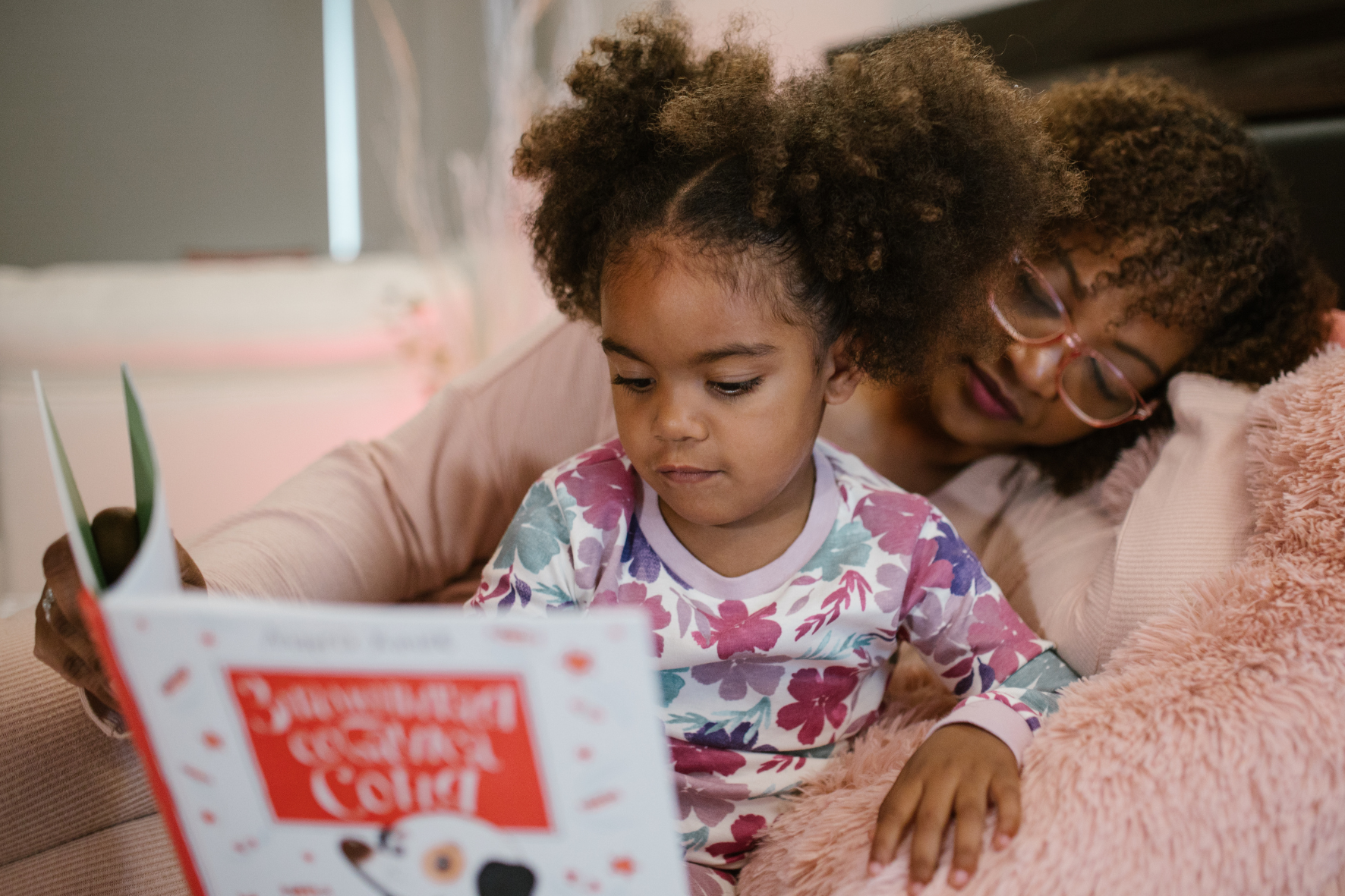
Read aloud often.
Choose simple, realistic books with rich vocabulary. Repetition builds confidence and understanding.
Ages 3–6: Refining Vocabulary and Expressive Speech
In the Primary years, children’s spoken language becomes more precise, sophisticated, and joyful. They delight in learning new words and love to engage in meaningful conversation. In Montessori classrooms, lessons on classification, matching, storytelling, and sound games help refine vocabulary and articulate speech.
How Families Can Support Language at This Stage
Encourage storytelling.
Ask open-ended questions: What happened at the park? How did you make the biscuits?
Expand (don’t correct) language.
If a child says, “Look, big truck!” you might respond,
“Yes, a big cement mixer is driving down the road.”
Adults model richer language without interrupting confidence.
Support listening skills.
Practice short, clear directions:
“Please place your shoes by the door, and then wash your hands.”
Children feel capable when they successfully follow multi-step directions.
Offer real-world vocabulary.
Cooking, gardening, caring for pets, sorting laundry—all provide opportunities for precise and meaningful vocabulary.
Continue reading books aloud.
Even before they can read independently, children love complex narratives. Read slowly, using expressive but natural language. Choose high-quality picture books—both fiction and nonfiction—that offer rich vocabulary, beautiful illustrations, and realistic, meaningful themes. As children approach 4½ to 5 years old, you can gradually introduce short chapter books, which build sustained attention, strengthen listening comprehension, and invite deeper conversation about characters, settings, and ideas.
Ages 6–12: Deepening Understanding and Developing Articulate Expression
Elementary children are natural philosophers. Their reasoning mind blossoms, and they are eager to understand the “why” behind everything. Spoken language at this age becomes a tool for reasoning, exploring ideas, collaborating, and forming arguments. In Montessori classrooms, discussions, presentations, and collaborative projects help children move from concrete to abstract thinking.
How Families Can Support Language at This Stage
Invite real conversations.
Ask children for their opinions and listen thoughtfully. Avoid rushing to solve or correct—first seek to understand their thinking.
Model respectful dialogue.
Elementary children are keen observers of how adults disagree, reason, and resolve conflict. Use calm, clear, and empathetic language.
Discuss meaningful topics.
Talk about history, nature, the books they are reading, or current events (in age-appropriate ways). They thrive on big ideas.
Support vocabulary growth through experiences.
Museum visits, hikes, cooking new recipes, or listening to music from different cultures all enrich language through context and curiosity.
Encourage organized thinking.
Invite them to explain their plans, describe a process, or teach you something new. Explaining helps children refine their own understanding.
Keep reading aloud.
Many families stop too early, but older children still deeply benefit from shared reading. Reading aloud exposes them to richer language, more complex ideas, and stories that spark meaningful discussion. At this age, children can enjoy increasingly sophisticated books—narratives that explore history, explain how things work, or invite them into the imaginative worlds of fantasy and adventure. Encourage your child to explore their interests and to talk with your local librarian, who can help them discover high-quality literature that matches their curiosity and developmental stage.
The Role of the Adult: A Model of Beautiful Language
Children at all ages learn language by absorbing what they hear. When adults speak with clarity, kindness, and presence, children naturally follow. Try to:
- Speak slowly and calmly.
- Use precise vocabulary.
- Make time for real conversations.
- Listen fully when children speak.
- Create quiet moments without screens or background noise.
Language is not something we “teach” in isolated lessons—it is something we live with children every day. By offering rich vocabulary, inviting their thoughts, and listening with patience, we help them grow into articulate, confident, and thoughtful communicators.
You might also like