Inside the Montessori Elementary Classroom
Multi-Age Learning and the Power of Collaboration
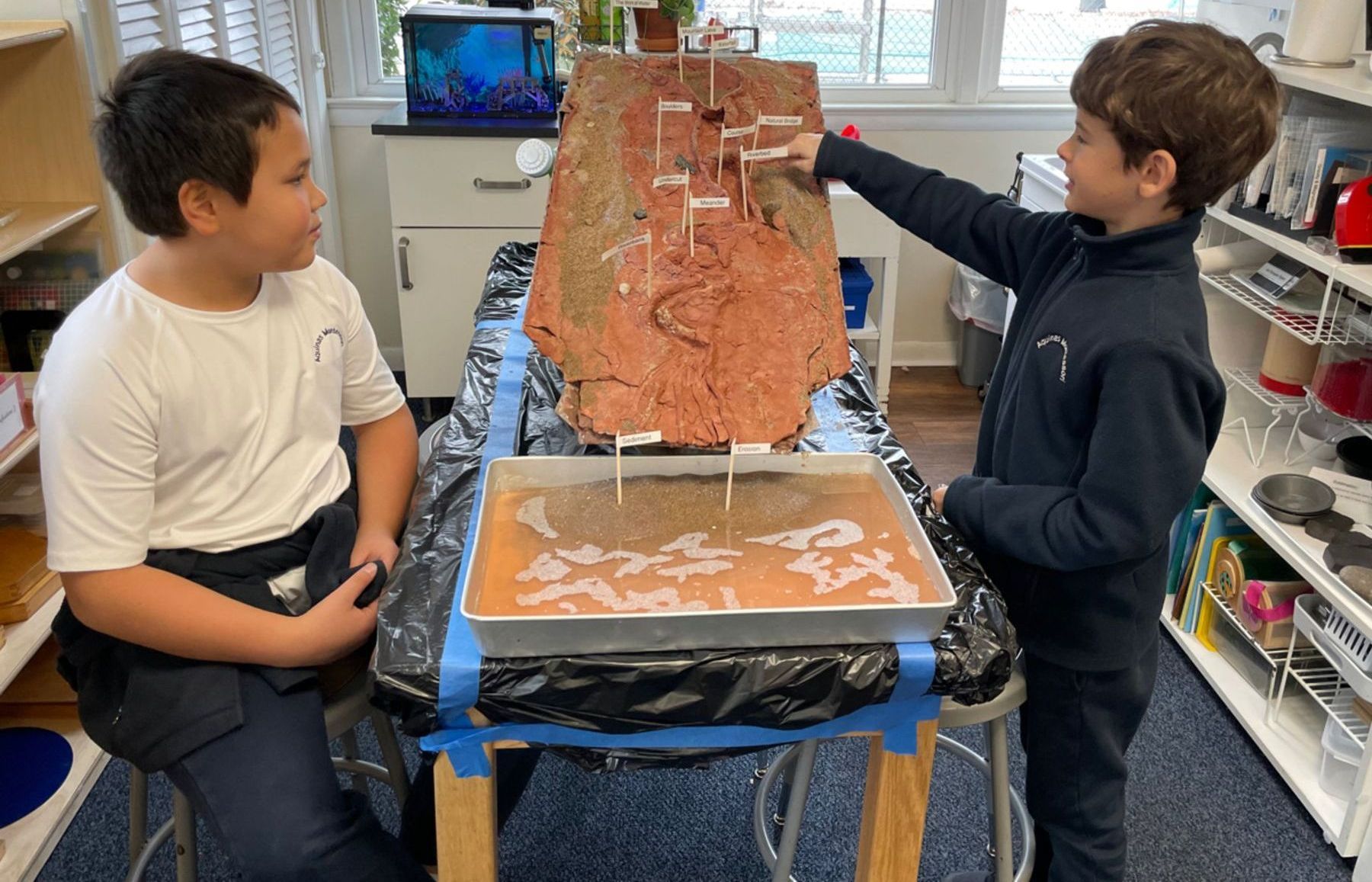
Walk into an elementary Montessori classroom, and you’ll immediately notice something different. Rather than desks in rows and a teacher at the front, you’ll see students spread across the room: some working together at a table, others reading alone, still others engaged in a science experiment, or solving math problems with colorful bead materials. You may also notice that the children range widely in age—typically spanning three grade levels. This is no accident. It’s one of the most distinctive and powerful features of the Montessori model.
So how do Montessori teachers guide such a diverse group of students effectively? And why is this collaborative, multi-age structure especially suited for 6- to 12-year-olds? The answers lie in a deep understanding of child development and a radically different vision of what education can be.
The Structure of a Montessori Elementary Classroom
In Montessori elementary classrooms, children are grouped in three-year age spans—most often 6–9 years (Lower Elementary) and 9–12 years (Upper Elementary). This structure reflects Montessori’s core belief that children learn not only from adults, but also—and sometimes more powerfully—from one another.
The teacher presents key lessons across the curriculum—math, language, geometry, biology, history, geography, and more. These lessons are often given to small groups of children who are ready for the material, rather than to the entire class at once. Because lessons are individualized or given in small, flexible groupings, each child moves through the curriculum at their own pace. Older children revisit and reinforce their knowledge by mentoring younger ones, while younger students are naturally inspired by the work and capabilities of their older peers.
This is not chaotic—it’s purposeful. Montessori guides meticulously observe and plan for each child, preparing the environment and introducing increasingly complex materials as the child shows readiness. The result is a classroom that hums with focused, independent, and collaborative work.
Why Multi-Age and Collaborative Learning Matters at 6–12
Between the ages of approximately 6 and 7, children undergo a profound shift in development. No longer content with learning through sensory exploration alone, elementary-aged children are driven by imagination, abstract thought, moral reasoning, and a hunger to understand how the world works. They begin to seek social connection and peer relationships in new ways. Montessori called this the age of reason—a time when children are deeply interested in fairness, ethics, community, and intellectual exploration.
A multi-age classroom offers the perfect environment for this developmental stage:
- Opportunities for Leadership and Mentorship: Older students develop confidence and empathy by helping younger ones. They also reinforce their own knowledge through teaching—a powerful form of mastery.
- Natural Differentiation: In any group of children, abilities vary widely. A three-year span allows all students to find peers at their level and move at a pace that suits their individual learning needs.
- Collaborative Projects and Big Work: Montessori elementary students often engage in research projects and explorations sparked by what Montessori called the “Great Lessons”—broad, interdisciplinary stories that spark wonder about the universe, life on Earth, and human achievement. These big questions invite children to work together to investigate, experiment, and share their discoveries.
- Social Development: Mixed-age classrooms more closely resemble real-world communities, where people of varying abilities, experiences, and ages live and work together. Children learn to negotiate, compromise, take turns leading and following—all key skills for social and emotional development.
The Guide’s Role in a Collaborative Classroom
The Montessori guide in an elementary classroom is less a traditional teacher and more a facilitator of exploration. They give key lessons, introduce materials, and help students set goals. But they also know when to step back—to allow children to struggle productively, solve problems together, and take ownership of their learning. In many ways, the guide is the architect behind the scenes, constantly observing, recording, and gently redirecting when necessary.
Because the curriculum is interconnected, a lesson in geography might lead to questions about biology, which in turn sparks a child’s interest in writing a report or designing an experiment. The guide supports these lines of inquiry, helping children develop skills while honoring their natural curiosity.
A Community of Learners
The Montessori elementary classroom becomes a true community of learners. Respect, responsibility, and independence are cultivated every day—not through rewards or punishments, but through real experiences of contributing to a shared space and shared goals. In this environment, collaboration is not an add-on; it is foundational.
The multi-age, child-centered design of Montessori elementary education honors the unique developmental needs of children in their second plane of development. It fosters not just academic competence, but also social awareness, critical thinking, and a lifelong love of learning.
And perhaps most importantly, it helps children see themselves not just as students, but as capable, curious members of a larger human story.
You might also like